T/Const John Walter Tinsley

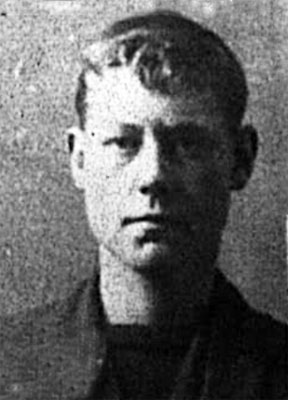
1903 Apr 15. Born Enfield London (he told RIC it was 1900 and used 1902 on seaman's certs) (he even told New Zealand that it was 1903 Apr 15, but in New zealnd)

1911 census at 12 Claremont Street, Edmonton

He gets Mercantile Marine Medal and British Medal for service in WW!

1918 Dec Sails as OS on Arzila
1919 Jun sails as OS on #87245
1919 Aug 11 Sails as an AB on #104289

1920 Nov 19 Joined with RIC no 75754 and ADRIC No 445 & 421 (977 ) ex-Sailor
1921 Oct 28 Posted to 4 Gds from Gormanston
1922 Jan 1. Sails as an AB again
1933 Apr 8 An article about him in Auckland Star. Some of which is true
Though many of the returned men were showing grey hairs—a reminder that a considerable time had elapsed since the days. of the. Great War in which they took part—the Birkenhead Ex-eervicemen's Association prided itself on having the youngest- member of the New Zealand" Returned Soldiers' Association, stated the president,: Mr. G. B. Chinnery, at the annual' meeting. This was Mr. J. W. Tinsley, who, though now only 29 years old, was "doing his bit" in France at the age of 14.
Born at Te Pea, Hok'itika,. on April 15, 1903, Mr. Tinsley twelve years subsequently went to England, where he joined His Majesty's troopship Grantully Castle on October 17, 1917, and served in France on the ambulance train till November 23. He transferred to the troopship Ormonde, which was chased by a submarine, but escaped. Receiving injuries through falling into a lifeboat, he was sent to the Royal Alfred Hospital at Sydney, where he was a patient from February 28, 1918, till May 8, when he was put aboard the troopship Osterley till July 10. From August 15 till October 21 he was with the "mystery ship" Darnholme, which ran ashore at South Foreland, on the Kentish coast of England, and sank. Between October 23 and December 17 he was on the troopship Kenil worth Castle, which carried American troops from New York, Newport, Montreal, and other ports to Cherbourg and Le Havre, and he was in New York when the Armistice was signed on'- November 11. On December 23 he joined the Arzila, engaged in carrying troops for the Afghanistan front.
Suffering a recurrence of the trouble arising from his injury on the Ormonde, Mr. Tinsley spent the ensuing live months in the naval hospital at Invergordon, Scotland. From June 3, 1919, till Jul y. 2S-J»- j wa«. on..<kkfey again, <»,the Coblenz; and on August 9 on the Admiralty oil tanker Le Coq, carrying oil to Spitzbergen after the Russian trouble, leaving her on October 6 in England. He next served from October 21 to November 21 on the troopship Caronia, carrying relief troops to India, and returning others. A period in hospital at Inverness followed, and then at St. John's V.A.D. Hospital at Hull, whence he was sent to the North Middlesex Military Hospital in London. He received his discharge on May 8, 1922, on pension.
Mr. Tinsley then joined the merchant service, shipping at Liverpool as an able seaman for Brazil on the ship Francis, which went. 1800 miles up the Amazon River. On her return to England be joined the Logician, and during the period from September 9 to February 13, 1923, travelled all round the West Indies and along the Pacific Coast. From March 17 till May 17 he was on the ship Gaelic Star, which went to the River Plate. Again becoming ill, he entered the Prince of Wales Hospital, London, and back to the North Middlesex Hospital, where he remained nine months. He then got a berth on the steamer Queensland from May 20, 1924, till September 14, in the Mediterranean-South African trade. On September 26, 1924, he embarked by the Tainui at Southampton and returned home, arriving at Auckland on' November 12.
After a while ashore ho worked on the motor ship Hauraki for five months. He then got a landsman's job, joining the Auckland Fire Brigade, in which he served from April 19, 1926, till May 13, 1929. Ho returned to sea in the steamer Kaponga, leaving that vessel to work in the coal mines at Glen Afton, where he was employed for two years. Now he is a relief worker at Birkenhead!
1940 Aug 1. SECOND ECHELON MEN RETURN HOME: Four soldiers who were landed at Capetown for medical treatment returned to Auckland yesterday. Left: Driver R. L. Finlay, Sergeant J. W. Tinsley, and Gunner A. A. Daly.
1944 Jan 26 In New Zealand for assault. He was convicted and dischared. He was a foreman Stevedore
AUCKLAND, This Day. That a husband had the right to chastise his wife to prevent her immorality was a submission made by counsel this morning when John Walter Tinsley, 40, foreman stevedore, was charged with assaulting his wife, Gladys Rose Tinsley. Accused denied the charge.
Mrs Tinsley, who had a slightly blackened eye, said in evidence that rhe had been living apart from her husband for about three months. She was walking along a city street last evening in the company of an Allied serviceman when her husband, approaching from behind, came between them, using some language and striking her. She ran down a side street.
Counsel (Mr E. L. Thwaites), said that while Tinsley was away on active service, his wife had been tangled up with servicemen. Information that his wife had been carrying on with servicemen , during his absence, was unfortunately given to him by one of his two children, a boy aged 11. Arm in Arm ‘Last evening he met his wife and a serviceman by accident. They were arm in arm and showing the effects of alcohol and his wife was carrying two bottles of beer. He told the serviceman that the woman was his wife. Later he found them in each other's arms and smacked his wife’s facie. Tinsley in evidence denied that he struck his wife when he first saw her in the street, but only when later she was in a lane with the serviceman. Counsel submitted that in the circumstances the amount of chastisement was not excessive.
The magistrate (Mr Morling) said that apparently Tinsley smacked his wife’s face without stopping to think, but he had not the right to do this. He was convicted and discharged.
1962 Appears when he died in New Zealand
Drivers and Vets